

 The Hudson River begins as a small mountain lake on the side of the state’s highest peak Mt. Marcy and ends in New York Harbor, one of the world’s busiest and most populated metropolitan ports. About halfway along its course it becomes an estuary, an arm of the sea, that provides spawning and nursery grounds for commercially valuable fish, crabs, and shellfish. [Read more…] about Hudson River Estuary Wildlife and Habitat
Westchester County
DEC Hudson Valley Biodiversity Documentary Wins Emmy
 The Nature of Nature: Biodiversity in the Hudson Valley, a documentary film produced by the NYS Department of Environmental Conservation (DEC), has received a New York Emmy award in the category of Environmental Science – Long Form Content. [Read more…] about DEC Hudson Valley Biodiversity Documentary Wins Emmy
Westchester County and the American Revolution
 This fall marks the 250th anniversary of the 1776 New York Campaign which brought the American Revolutionary War directly into Westchester County, including the pivotal Battle of White Plains on October 28, 1776. [Read more…] about Westchester County and the American Revolution
Rudolph Halley’s Comet Burned Bright in the Early Days of Television
 In the early 1950s, a Senate investigative drama captivated the nation. Three years before the famed Army-McCarthy hearings, the Kefauver Committee – officially the Senate Special Committee on Organized Crime in Interstate Commerce – probed organized crime and its entanglement in the political fabric of New York City. [Read more…] about Rudolph Halley’s Comet Burned Bright in the Early Days of Television
A History Lover’s Guide to the Hudson Valley
 The Hudson Valley is more than just scenic vistas — it is a birthplace of American history. From Native Americans to the Gilded Age, history has unfolded all along the Hudson River.
Local historian and occasional New York Almanack contributor A.J. Schenkman traces the histories of one of America’s most historic regions in A History Lover’s Guide to the Hudson Valley (History Press, 2026). [Read more…] about A History Lover’s Guide to the Hudson Valley
New Yorkers Being Inducted into Abolition Hall of Fame Saturday
 The institution of race-based slavery in what is now New York dates to 1627 when 22 enslaved Africans were brought to New Amsterdam (now New York City) by the Dutch West Indies Company. From that day forward some Americans opposed slavery and sought its abolition.
The National Abolition Hall of Fame and Museum in Madison County, NY, will induct four abolitionists on Saturday, October 24, 2026: Black Americans William Wells Brown and Samuel Ringgold Ward, and also William and John Jay II – descendants of American Patriot John Jay. [Read more…] about New Yorkers Being Inducted into Abolition Hall of Fame Saturday
Great Hudson River Revival Signs On Exhibit
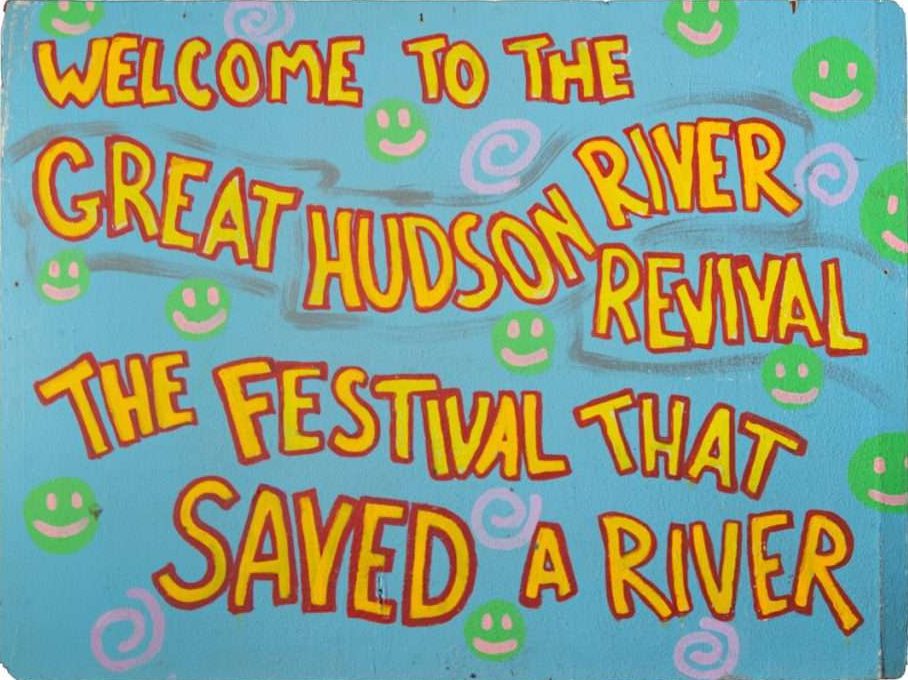 In 1966, folk singer Pete Seeger (1919-2014) and a group of activists decided to “build a boat to save the river,” envisioning that a sloop would bring people to the shoreline and inspire a movement to protect the Hudson River.
Three years later, Clearwater set sail with a mission to save the Hudson through education, advocacy, and sailing. [Read more…] about Great Hudson River Revival Signs On Exhibit
Two-Wheel Bureaucracy: How America Once Governed Bicycles
 For those who choose two wheels, bicycles are celebrated as eco-friendly, low-barrier alternatives to the automobile. A bicycle license plate recently highlighted by the Vermont Historical Society however, reveals a time when they were subject to the same municipal oversight, state regulation, and licensing as motor vehicles.
In fact, municipal bicycle licensing and registration was widespread across Vermont, New York State, and indeed the United States, from the 1930s through the mid-1970s. [Read more…] about Two-Wheel Bureaucracy: How America Once Governed Bicycles
Katharine Bement Davis & America’s First Sexual Revolution
 Decades before Alfred Kinsey released his famous “Reports” on human sexuality, Katharine Bement Davis (1860-1935) conducted a pioneering study of female sexuality.
Published in 1929, Factors in the Sex Life of Twenty-Two Hundred Women was notable not only as the first major study of women’s sexuality and the first such study conducted by a woman, but also as the first published study of “normal” women’s sexuality ― what Davis defined as the study of women who were “not pathological mentally or physically.” [Read more…] about Katharine Bement Davis & America’s First Sexual Revolution
New York Horse Ferries: A Short History
 Early ferry travel across New York’s rivers and large lakes relied on rowboats, scows, barges, or sail ferries, which were vulnerable to shifting currents and bad weather. New York’s horse ferries bridged the gap between this unpredictable transportation and the mechanical age.
Known as “teamboats,” these vessels emerged in 1814 as a direct response to the commercial monopoly held by Robert Fulton and Robert Livingston over steam navigation in New York waters. [Read more…] about New York Horse Ferries: A Short History
Belmont Park Through The Ages
 Sporting venues that are operational across succeeding generations develop a distinct affinity with those who patronize the many performances at these special locales.
These settings are more than just a point-of-interest on a geographic information system or map; instead, all the successes, failures and experiences combine with our psyche and heart strings into something more than physical, and form an emotional legacy across the measure of time. [Read more…] about Belmont Park Through The Ages
Naval Power & The 1776 Taking of New York City
 The occupation of New York Harbor, and the capture of the city of New York were the most conspicuous British successes of the summer and fall of 1776 during the Revolutionary War. In June, Commodore Peter Parker (1721-1811) and General Henry Clinton (1730-1795) were meeting with defeat at the Battle of Sullivan’s Island at Charleston, SC, and Benedict Arnold was racing to construct a makeshift naval fleet to stall a British invasion from Canada on Lake Champlain.
At the same time, two brothers, General Sir William Howe (1729 –1814) and Commander-in-Chief of the North American Station, Richard Howe (later Earl Howe, 1726-1799), were arriving in New York Bay. [Read more…] about Naval Power & The 1776 Taking of New York City
Hungry Horned Owl Rescued From Soccer Net
 NYS Environmental Conservation Officer (ECO) Brandon Franz responded to a call regarding an owl stuck in a soccer net in Armonk, a hamlet near the Connecticut border in the town of North Castle, in Westchester County on August 28, 2026 [Read more…] about Hungry Horned Owl Rescued From Soccer Net
With ‘Operation Rotten Apple’ Upstate Police Round-Ups Surge
 Federal authorities arrested 2,197 people across New York last month during what they have derisively named “Operation Rotten Apple,” the highest monthly immigration arrest total since the Trump administration’s round-ups began in New York State. [Read more…] about With ‘Operation Rotten Apple’ Upstate Police Round-Ups Surge
Saratoga Race Course’s Featured Jump Race: Some History
 The Jonathan Sheppard Memorial Stakes race is scheduled to be run at Saratoga Race Course on September 2, this season. This Grade 1 steeplechase race, with a purse of $150,000 will kick off the final week of this year’s track season.
The featured jump race at Saratoga was renamed in 2021, and had formerly been the New York Turf Writers Cup, which had been run previously at other racetrack locations in the Empire State. [Read more…] about Saratoga Race Course’s Featured Jump Race: Some History
New York & The Struggle to Finance the Revolutionary War
 One of the earliest acts of the New York Provincial Congress was the promise on May 24, 1775, to repay all monies advanced for the resistance to British domination. When the old colonial government was gradually superseded in 1774 and 1775 by an extra-legal government of committees and congresses chosen by the people, these bodies were met immediately by the problem of financing both the political activities and the military operations. The latter began with the plans to seize Fort Ticonderoga and Crown Point, shortly after the colonists had been electrified by the news of Lexington and Concord. [Read more…] about New York & The Struggle to Finance the Revolutionary War
Old Hudson Valley Churches Now Community Venues
 Due to shrinking congregations and finances, many abandoned church buildings in New York’s Hudson Valley have been reused for other purposes. Some are now apartments or condominiums, fraternity houses, museums, historical societies, businesses and vibrant art venues and community centers. [Read more…] about Old Hudson Valley Churches Now Community Venues
Hudson Valley Loyalists and the Violence of Revolution
 In many respects the American Revolution was a civil war pitting Americans loyal to the Crown against other Americans loyal to the vision of a new nation they sought to create. Neighbor fought against neighbor, brother against brother, father against son. One of the epicenters of this desperate struggle was New York’s Hudson Valley.
Suffering for the Crown: The Hudson Valley Loyalists and the Violence of Revolution (University of Virginia Press, 2026) by Kieran J. O’Keefe details the extreme violence, persecution, and displacement experienced by white, Black, and Native American Loyalists during the Revolution. [Read more…] about Hudson Valley Loyalists and the Violence of Revolution
New York’s Response to the Declaration of Independence
 Conscious of the new political status which the Province of New York had attained by the adoption of the text of the Declaration of Independence by the Second Continental Congress on July 4th, the deputies of the New York Provincial Congress voted unanimously on July 10th:
“That the style or title of this House be changed from that of the Provincial Congress of the Colony of New York to that of the Convention of the Representatives of the State of New York.” [Read more…] about New York’s Response to the Declaration of Independence
Reluctant Warriors of 1936: William Bleakley & Herbert Lehman
 On a warm, clear afternoon in June 1926, 600 Westchester County Republican delegates gathered in the art deco casino at Playland Amusement Park on Long Island Sound to endorse their neighbor, state Supreme Court Justice William F. Bleakley (1883–1969), for New York Governor. [Read more…] about Reluctant Warriors of 1936: William Bleakley & Herbert Lehman