

 The Hudson River begins as a small mountain lake on the side of the state’s highest peak Mt. Marcy and ends in New York Harbor, one of the world’s busiest and most populated metropolitan ports. About halfway along its course it becomes an estuary, an arm of the sea, that provides spawning and nursery grounds for commercially valuable fish, crabs, and shellfish. [Read more…] about Hudson River Estuary Wildlife and Habitat
Hudson River
DEC Hudson Valley Biodiversity Documentary Wins Emmy
 The Nature of Nature: Biodiversity in the Hudson Valley, a documentary film produced by the NYS Department of Environmental Conservation (DEC), has received a New York Emmy award in the category of Environmental Science – Long Form Content. [Read more…] about DEC Hudson Valley Biodiversity Documentary Wins Emmy
Westchester County and the American Revolution
 This fall marks the 250th anniversary of the 1776 New York Campaign which brought the American Revolutionary War directly into Westchester County, including the pivotal Battle of White Plains on October 28, 1776. [Read more…] about Westchester County and the American Revolution
Historic Stockport Flats: A Sanctuary for Wildlife
 Stockport Flats is a 1,544-acre protected nature sanctuary located along the eastern shore of the Hudson River in the towns of Stockport and Stuyvesant in Columbia County, just north of the city of Hudson. [Read more…] about Historic Stockport Flats: A Sanctuary for Wildlife
Lock 9: Sam Clark’s Second Champlain Valley Mystery Novel
 Set against the waters, islands, and working landscapes of Lake Champlain, Sam Clark’s novel Lock 9 (Onion River Press, 2026) continues the story begun in The Inland Sea, his acclaimed debut mystery.
When a convicted murderer arranges a hit on retired Vermont State Police detective Fred Davis, a case of mistaken identity leaves a respected forensic investigator dead and launches a tense investigation that stretches from the Inland Sea to the Champlain Canal and Hudson River. [Read more…] about Lock 9: Sam Clark’s Second Champlain Valley Mystery Novel
A History Lover’s Guide to the Hudson Valley
 The Hudson Valley is more than just scenic vistas — it is a birthplace of American history. From Native Americans to the Gilded Age, history has unfolded all along the Hudson River.
Local historian and occasional New York Almanack contributor A.J. Schenkman traces the histories of one of America’s most historic regions in A History Lover’s Guide to the Hudson Valley (History Press, 2026). [Read more…] about A History Lover’s Guide to the Hudson Valley
Privatizing Colonization: The Patroonship of Rensselaerswijck
 Privatization is not a new concept; indeed, it was actively promoted by the United Provinces of the Netherlands to supplement its foreign policy by delegating certain responsibilities to the East and West India Companies. Formed as a joint-stock trading venture, the West India Company (WIC) was given a charter to monopolize trade from the Cape of Good Hope west to the outer reaches of New Guinea.
It had the power to raise its own armies and navies, make alliances with local sovereigns within its sphere of operations, and, if necessary, had the power to make war and peace in defense of its interests — essentially a privatization of foreign policy. [Read more…] about Privatizing Colonization: The Patroonship of Rensselaerswijck
The Archaeology of Kingston, New York
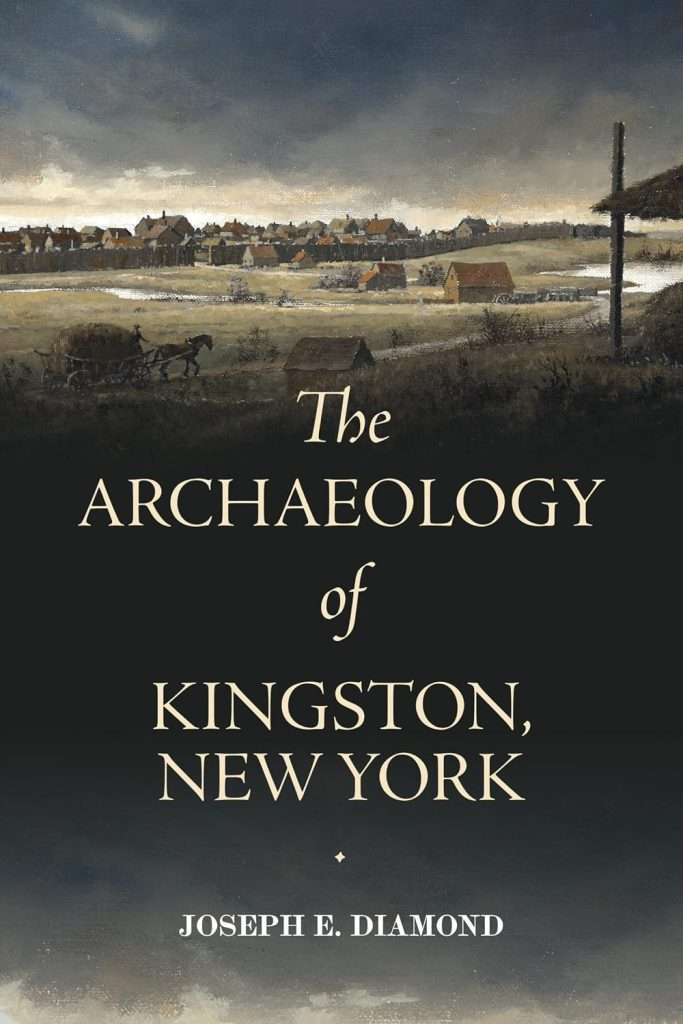 Kingston, NY began as a Dutch trading post in 1614 and became the state’s first capital in 1777 before British forces burned it later that year. Located along the Hudson River and Rondout Creek, it later thrived as a 19th-century industrial and transport center for cement, coal, and bluestone.
Dr. Joseph E. Diamond’s The Archaeology of Kingston, New York (SUNY Press, 2025) is a comprehensive analysis of 88 archaeological sites (82 within Kingston’s corporate boundaries and six nearby in areas like Hurley, Ulster, and Esopus) from Paleo-Indian times about 12,000 years ago, through the Dutch and British colonial periods, and into the nineteenth century. [Read more…] about The Archaeology of Kingston, New York
Great Hudson River Revival Signs On Exhibit
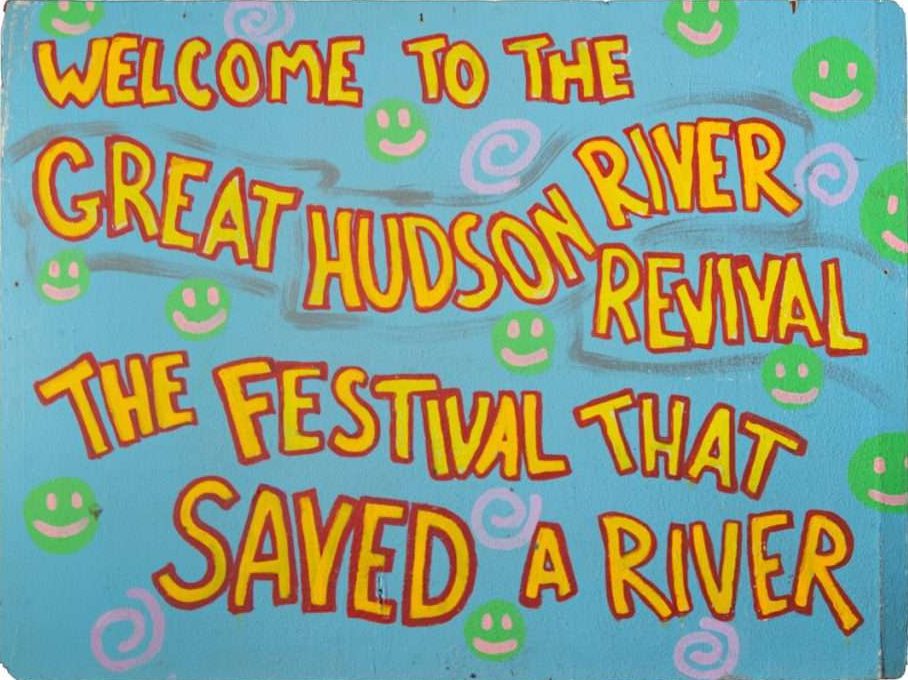 In 1966, folk singer Pete Seeger (1919-2014) and a group of activists decided to “build a boat to save the river,” envisioning that a sloop would bring people to the shoreline and inspire a movement to protect the Hudson River.
Three years later, Clearwater set sail with a mission to save the Hudson through education, advocacy, and sailing. [Read more…] about Great Hudson River Revival Signs On Exhibit
Tahawus: An Abandoned Adirondack Mining Community
 Tahawus, in Essex County, NY, is at the headwaters of the Hudson River and draws hikers, paddlers, and other outdoor and history enthusiasts year-round. Located in the town of Newcomb in Adirondack High Peaks, the mining community of Tahawus was deserted twice as two separate mining booms both collapsed. [Read more…] about Tahawus: An Abandoned Adirondack Mining Community
Rangers Spend Busy Week Responding to Recreationists in Distress
 NYS Forest Rangers had a busy week responding to a wildfire and several outdoor recreationists in distress, including lost, injured and ill hikers, and a lost ATV rider. [Read more…] about Rangers Spend Busy Week Responding to Recreationists in Distress
New York Horse Ferries: A Short History
 Early ferry travel across New York’s rivers and large lakes relied on rowboats, scows, barges, or sail ferries, which were vulnerable to shifting currents and bad weather. New York’s horse ferries bridged the gap between this unpredictable transportation and the mechanical age.
Known as “teamboats,” these vessels emerged in 1814 as a direct response to the commercial monopoly held by Robert Fulton and Robert Livingston over steam navigation in New York waters. [Read more…] about New York Horse Ferries: A Short History
New York’s Great Warpath & Historian Harrison Bird
 Lake George, NY resident Harrison Bird (1910-2003) belonged to a rare class of historians, those whose situate the local within the continental and, indeed, the global.
In four books published by Oxford University Press – Navies in the Mountains (1962), March to Saratoga (1963), Battle for a Continent (1965) and Attack on Quebec (1968) – Bird wrote about Lake George, Lake Champlain, Fort Ticonderoga, Saratoga, Quebec and the northern waterways not as isolated historic sites, but as parts of one strategic corridor: the route by which empires, armies, navies and ambitions moved between Canada and the Hudson Valley. [Read more…] about New York’s Great Warpath & Historian Harrison Bird
Naval Power & The 1776 Taking of New York City
 The occupation of New York Harbor, and the capture of the city of New York were the most conspicuous British successes of the summer and fall of 1776 during the Revolutionary War. In June, Commodore Peter Parker (1721-1811) and General Henry Clinton (1730-1795) were meeting with defeat at the Battle of Sullivan’s Island at Charleston, SC, and Benedict Arnold was racing to construct a makeshift naval fleet to stall a British invasion from Canada on Lake Champlain.
At the same time, two brothers, General Sir William Howe (1729 –1814) and Commander-in-Chief of the North American Station, Richard Howe (later Earl Howe, 1726-1799), were arriving in New York Bay. [Read more…] about Naval Power & The 1776 Taking of New York City
A Trip to Albany on the Steamboat James Kent, August 1823
 Yesterday afternoon we had the pleasure of visiting the new and beautiful steam boat James Kent, now lying at the foot of Liberty street [in the City of New York].
Through the politeness of Capt. Wiswall and Mr. Rhind, we enjoyed an opportunity of examining her from stem to stern, above and below, and of obtaining such facts, as will enable us to give a pretty accurate description of this superb vessel, which in many respects surpasses any boat, that has ever floated upon our waters. [Read more…] about A Trip to Albany on the Steamboat James Kent, August 1823
A NYC Fire Department Fireboats History
 With over 500 miles of shoreline, the fireboats of the FDNY have protected the city of New York for the last century and a half.
Utilizing historic images, David Rocco showcases their fascinating evolution from wooden-hull tugboats to modern-day specialized watercraft in Fireboats of the FDNY (Arcadia Press, 2026). [Read more…] about A NYC Fire Department Fireboats History
Erie Canal Lock One Could Anchor Albany Waterfront Redevelopment
 Advocates and archeologists seeking to leverage the legacy and impact of the Erie Canal to imagine a brighter future for Albany, gathered Thursday at the site of Lock 1 in Albany’s Warehouse District to share initial findings of an exploratory excavation that confirms the lock’s location.
The initial excavation has uncovered the location of the lock walls where they were expected be found based on previous magnetic imaging and historic maps and surveys. [Read more…] about Erie Canal Lock One Could Anchor Albany Waterfront Redevelopment
A French Officer’s Visit To Fishkill Supply Depot, 1780
 The following is an excerpt from Travels in North-America, in the years 1780-81-82 by François Jean de Beauvoir, Marquis de Chastellux (1734-1788), a French military officer who served during the American Revolution under General Comte de Rochambeau. Here he describes his travels in Dutchess County, including a visit to Fishkill Supply Depot.
The country is well cultivated; affording the prospect of several pretty farms, with some mills; and notwithstanding the [Revolutionary] war, Hopel township [Hopewell Junction in Dutchess County] is building, inhabited chiefly by Dutch people, as well as the greatest part of the state of New York, which formerly belonged to the republic of Holland, who exchanged it for Surinam. [Read more…] about A French Officer’s Visit To Fishkill Supply Depot, 1780
The Christopher Yates Papers Reveal Revolutionary Details
 Christopher Yates (1737-1785) of Schenectady was a surveyor by trade, a job that brought him into the frequent employ of Sir William Johnson. When the French and Indian War began in 1755, Yates joined the Second Albany Militia, serving under Johnson at some of the most crucial battles.
He was among the British troops defeated at Ticonderoga early in the contest during the July 8, 1758 Battle of Carillon, the bloodiest event of the war, with over 3,000 causalities. He later participated in the successful siege of Fort Niagara in July 1759. [Read more…] about The Christopher Yates Papers Reveal Revolutionary Details
1832: A Stuyvesant Lighthouse Disaster Kills Four Children
 The following text is from articles printed in March 1832 about the destruction of one of the Hudson River lighthouses on a tidal marsh flat near Stuyvesant Landing, only shortly after its construction in 1830.
A massive, moving field of spring ice crushed the 20 by 34 feet stone structure and killed four children. [Read more…] about 1832: A Stuyvesant Lighthouse Disaster Kills Four Children