 Under orders from the Republican administration of Donald Trump and Defense Secretary Pete Hegseth the US Army has presented final design plans to the US Commission of Fine Arts to restore and reinstall the Confederate Memorial (now being formally referred to as “the Moses Ezekiel Sculpture”) at Arlington National Cemetery. [Read more…] about Confederate Memorial Being Reinstalled at Arlington National Cemetery
Civil War
Harriet Tubman and the Civil War Combahee River Raid
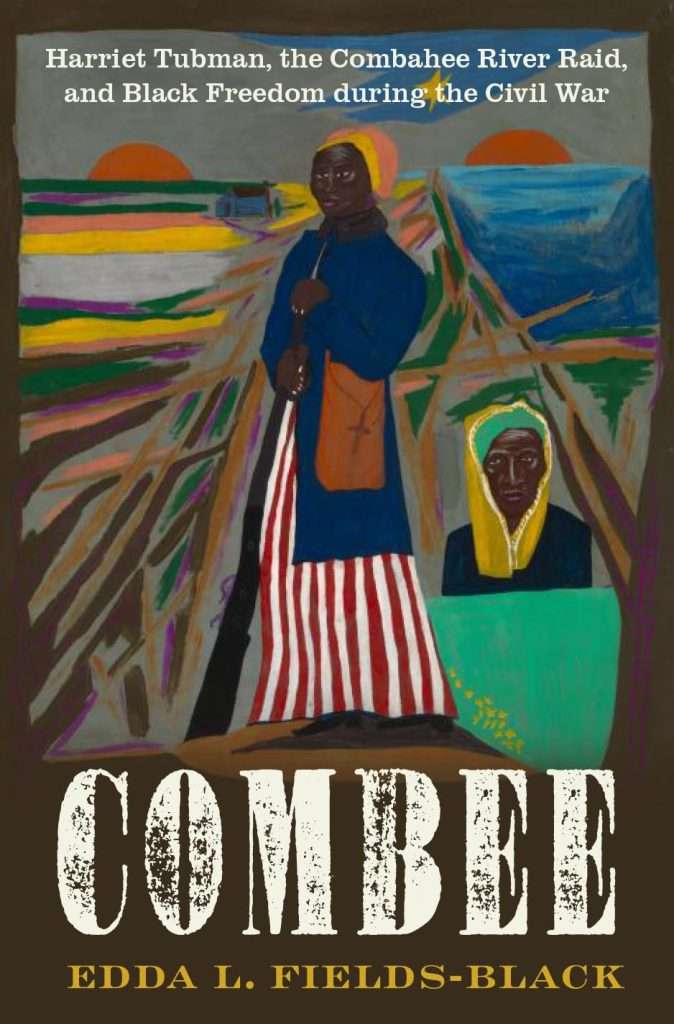 In the spring and summer of 1863, as the outcome of the Civil War, and with it the fate of the nation, hung in the balance, United States forces struggled to capture the offensive.
Along the coastal waters of South Carolina, the US Navy had taken the port cities of Port Royal and Beaufort, where war ships blasted their way into the harbor, resulting in the fleeing of wealthy white planters and other residents inland in the “Great Beaufort Skedaddle.” [Read more…] about Harriet Tubman and the Civil War Combahee River Raid
Upstate NY Incidents in the Life of Louisa Jacobs
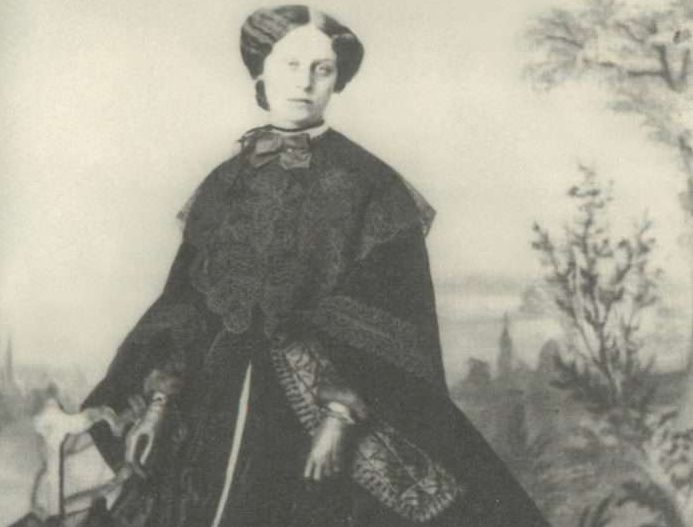 Louisa Matilda Jacobs (1833-1917), daughter of Incidents in the Life of a Slave Girl author Harriet Jacobs (1813-1897), was born enslaved by Dr. James Norcom in Edenton, North Carolina, but spent considerable time in Upstate New York. [Read more…] about Upstate NY Incidents in the Life of Louisa Jacobs
A New York Times War Reporter Mourns at Gettysburg
 For a story that is part of a series marking 175 years of eyewitness journalism from The New York Times, Dan Barry visited the Gettysburg battlefield.
In his article Barry described “a war correspondent for The New York Times named Samuel Wilkeson Jr.” who “trudged through the violated Pennsylvania landscape on a solitary quest. The weary journalist was searching for one particular Union soldier who was said to have had his leg blown off. His teenage son.” [Read more…] about A New York Times War Reporter Mourns at Gettysburg
Manhattan in Flames: Arson, Rebellion, Conspiracy, & Sabotage
 Early British colonists brought English common law to the colonies and adapted it to frontier conditions. Formally known as Lawes Divine, Morall and Martiall, “Dale’s Code” was a legal system enacted in 1610 (published in 1612) by the Deputy-Governor of colonial Virginia, Thomas Dale.
It mandated the death penalty for a range of misdeeds, from stealing grapes to trading with Indigenous populations. Arson too was a capital crime. [Read more…] about Manhattan in Flames: Arson, Rebellion, Conspiracy, & Sabotage
Slaveholders’ Mutiny: Frederick Douglass & The Southern Insurrection
 In a July 4, 1862 speech to an audience of about 2,000 people in Himrod’s Corner, in Yates County, NY, Frederick Douglass described what we now remember as the American Civil War as a “slaveholders’ mutiny.”
As a recent New York Times op-ed pointed out, naming that war is very much a political decision that shapes and is shaped by our view of the past and American history. During the war it was usually referred to as an “insurrection” or a “rebellion.” Civil War is a more neutral term that avoids placing blame for ripping the country apart or branding the Southern actions as treasonous and ignores the future of slavery in the United States as the fundamental cause of the war. [Read more…] about Slaveholders’ Mutiny: Frederick Douglass & The Southern Insurrection
New York’s Early Torpedo Development History
 The word “torpedo” is generally believed to have been first used by New York steamboat pioneer Robert Fulton (1765-1815) around 1800 to describe a device with an enclosed mass of gunpowder which was to be exploded beneath enemy ships.
The word may have been chosen due to the similarity in the way in which the device and the torpedo fish both communicated shock, or simply because detonation of the charge rendered fish torpid. [Read more…] about New York’s Early Torpedo Development History
1960s & 1970s Historical Artifact Thefts
 It was 1964, ten years after replica Fort William Henry Museum first opened its doors to tourists. It was also one of the years of the centennial anniversary of the American Civil War (1861–1865).
So, Fort William Henry, a museum that interprets the history of the French & Indian War (1755–1763), decided to also have an exhibit about our nation’s bloodiest conflict. [Read more…] about 1960s & 1970s Historical Artifact Thefts
Acclaimed Indigenous Historian Laurence Hauptman, 81
 Dr. Laurence Hauptman, a Distinguished Professor Emeritus of History at SUNY New Paltz, has passed at the age of 81. He was the author, co-author, or co-editor of twenty-one books and numerous articles, mostly on the Indigenous peoples of North America. [Read more…] about Acclaimed Indigenous Historian Laurence Hauptman, 81
John Brown Farm: Abolitionist Vision to Memorial Site
 North Country writer Sandra Weber recently joined the ADK Talks podcast to discuss John Brown Farm: From Abolitionist Vision to Memorial Site (Purple Mountain Press, 2026), is a book devoted entirely to the history and meaning of the John Brown Farm State Historic Site in North Elba, Essex County, NY. [Read more…] about John Brown Farm: Abolitionist Vision to Memorial Site
Josiah Stratton’s Second Chance at Life
 When Josiah Stratton was laid to rest in the Village Cemetery in Galway, NY, in 1904, he left behind a life of service to his county, survival in war, and dedication to family spanning his 94 years on earth.
His story is also one of tragedy and survival that could have ended 30 years too soon. [Read more…] about Josiah Stratton’s Second Chance at Life
Ulysses S. Grant: From John Brown to Grant’s Cottage
 Ulysses S. Grant’s ancestors first came to America in 1630 when Englishman Mathew Grant landing in Dorchester, Massachusetts. Grant was always proud of his forebears, but the most important individuals in his life were his parents.
His father Jesse Root Grant (1794-1873) was an ardent abolitionist who spent part of his early years living in the home of the father of the John Brown. His mother Hannah Simpson Grant (1798-1883) came from Pennsylvania parents who were die-hard Jacksonian Democrats. [Read more…] about Ulysses S. Grant: From John Brown to Grant’s Cottage
The Voting Rights Act & The Great Betrayal of 1877
 On April 24, 1877, on orders from President Rutherford B. Hayes, federal troops withdrew from the state house in Louisiana — the last federally defended state house in the South — just 12 years after the end of the Civil War.
This withdrawal marked the end of Reconstruction and paved the way for the unrestrained resurgence of white supremacist rule in the South, carrying with it the rapid deterioration of political rights for Black Americans.
What began with Hayes’s elevation to the Presidency following the disputed Election of 1876, is now having dramatic political consequences 150 years later. [Read more…] about The Voting Rights Act & The Great Betrayal of 1877
When America Scrapped Its History For The War Effort
 It was October 1942, ten months after America’s entry into the Second World War (1941–1945). A cannon ball, said to be from the Battle of Lake George, was donated to a scrap metal drive in Fort Edward.
The Battle of Lake George was a series of three military engagements on September 8, 1755, near the waterway’s south end. The outcome was a British victory over the French and their Indigenous allies during the French & Indian War (1755–1763). [Read more…] about When America Scrapped Its History For The War Effort
The Grove: Abolitionist Congregations in Rye, NY
 Spring sun warmed the air early Saturday morning, May 12, 1855, when the famous abolitionist and orator Frederick Douglass and his associates started their ten-minute walk from the New Haven Railroad Station in Mamaroneck to their destination in Rye Neck, an inconspicuous corner of Rye, in Westchester County, New York.
Leading the group was the Reverend Levin Tilmon, president of the First Colored American Congregational Grove Company of Rye Neck, the formal dedication of the “Meeting Grove” being the reason for Douglass’ visit. [Read more…] about The Grove: Abolitionist Congregations in Rye, NY
The First Civil War Reenactor: General Judson Kilpatrick
 Not long after the guns of the Civil War fell silent, many former combatants took up the pen to re-fight their battles on paper. The conflict had been a defining moment in the lives of thousands of young soldiers. Major General Judson Kilpatrick (1836-1881), arguably one of the most colorful figures to emerge from war, longed for a more visual reminder of things past.
And in 1878, on the bucolic fields of his northern Deckertown New Jersey farm, “Little Kil” as he was affectionately called by his West Point classmates, sought to recreate scenes familiar to the old veterans. General Kilpatrick would stage the first major reenactment of a Civil War battle.* [Read more…] about The First Civil War Reenactor: General Judson Kilpatrick
Fort Ontario Military History, 1812-1945
 After the American Revolutionary War (1775-1783), remaining friction between Britain and the United States escalated into another war in North America 30 years later.
Both countries were determined to assert control over Lake Ontario, bringing Fort Ontario to the front lines of the War of 1812 (1812-1815). Britain saw Oswego as an integral connection to New York shipyards that could support future naval battles and supply additional American ships. [Read more…] about Fort Ontario Military History, 1812-1945
John Brown’s Body: A Battle Hymn For the Republic
 Amid the political turmoil that we have seen unfold in 2025, the abolitionist John Brown has been popping up in the social feeds of the left. The phrase “Don’t argue with people John Brown would have shot” jumps out as a bold statement, and insists on a knowledge of this particular figure in American history.
A man who fought to end the institution of slavery and for equality of Black Americans, John Brown swore an “eternal war with slavery,” and gave his life for that cause. But even a brief dive into the life and death of John Brown will bring you to the song “John Brown’s Body.” [Read more…] about John Brown’s Body: A Battle Hymn For the Republic
Manhattan’s Statue to Unrepentant Racist Samuel Sullivan Cox
 There is a statue of Samuel Sullivan Cox in Manhattan’s Tompkins Square Park. The statue originally was near Cox’s home on East 12th Street but in 1924 it was moved.
A plaque accompanying the statue reads “Samuel Sullivan Cox, the Letter Carrier’s Friend, Erected in Grateful and Loving Memory of his Services in Congress by the Letter Carriers of New York, his Home, and of the United States, his Country.” [Read more…] about Manhattan’s Statue to Unrepentant Racist Samuel Sullivan Cox
The Sewards of New York: A New Biography
 The Sewards of New York: A Biography of a Leading American Political Family (Three Hills – Cornell University Press, 2025) by Thomas P. Slaughter shines a light on one of the most important and fascinating political families of the nineteenth century.
Through recently discovered family correspondence, Slaughter unveils the inner lives of the Seward family, tracing their joys and sorrows as the nation grappled with rapid expansion and deepening divisions on its path to the Civil War. [Read more…] about The Sewards of New York: A New Biography