
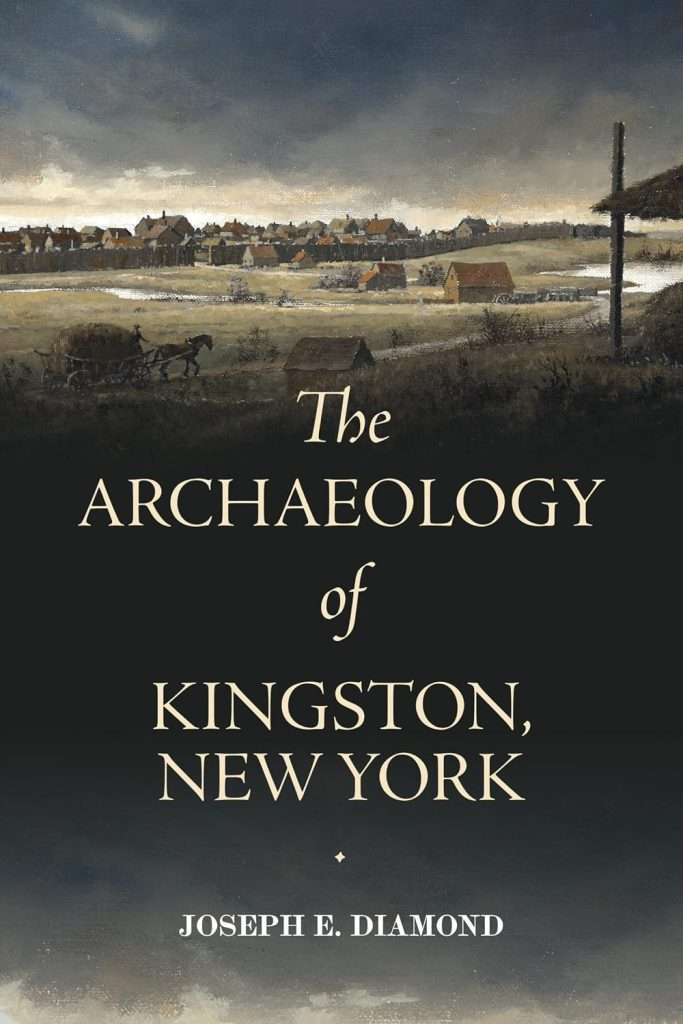
 Kingston, NY began as a Dutch trading post in 1614 and became the state’s first capital in 1777 before British forces burned it later that year. Located along the Hudson River and Rondout Creek, it later thrived as a 19th-century industrial and transport center for cement, coal, and bluestone.
Dr. Joseph E. Diamond’s The Archaeology of Kingston, New York (SUNY Press, 2025) is a comprehensive analysis of 88 archaeological sites (82 within Kingston’s corporate boundaries and six nearby in areas like Hurley, Ulster, and Esopus) from Paleo-Indian times about 12,000 years ago, through the Dutch and British colonial periods, and into the nineteenth century.
The book brings together new information and includes sites such as Sailor’s Cove and Cantine’s Island; the founding of Wiltwyck in the early colonial period; key sites in the Stockade District; the Matthew Persen House; maritime archaeological sites; key cemeteries; and noteworthy sites related to Black Americans in the region.
Along with the archaeological discussion, the book includes information about local lithic geology, glacial geology, and flora and fauna that were important dietary components of precontact Native Americans.
The Archaeology of Kingston, New York offers a complete introduction to the region for anyone interested in New York history and its study and recovery.
Joseph E. Diamond is Associate Professor of Anthropology at SUNY New Paltz. He is Vice President of the New York Archaeological Council.
Book Purchases made through Bookshop.org support both your local independent bookstore and New York Almanack’s mission to report new publications relevant to New York State. Purchases via this Amazon link also support the Almanack.

Leave a Reply